Is the space holding more than it can comfortably support?
Remove pieces that are damaged, duplicated, no longer worn, or stored in the wrong room before deciding how much organizer capacity is needed.
Homivelle Closet & Bedroom Tips
A useful closet is not measured by how much it can hold. It works when clothes, shoes, accessories, and seasonal items each have a clear place, everyday pieces stay easy to reach, and bedroom storage does not spill back onto chairs, floors, or surfaces.
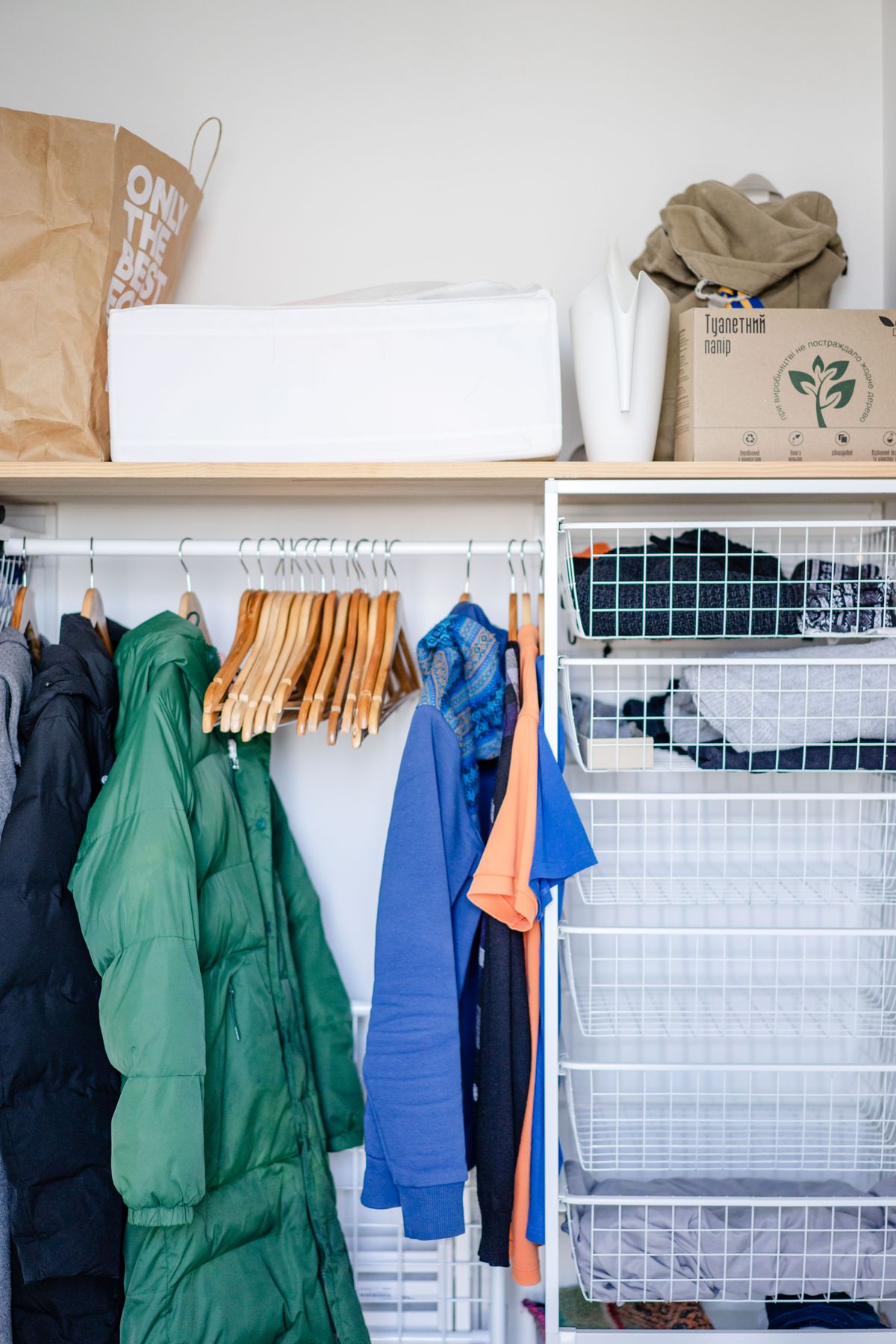
Before You Add Storage
More organizers will not help if the real problem is too much inventory, poor placement, or categories that are difficult to return. Use these three questions before changing the layout.
Remove pieces that are damaged, duplicated, no longer worn, or stored in the wrong room before deciding how much organizer capacity is needed.
Frequently worn clothing and shoes should not require moving boxes, lifting stacks, or reaching behind rarely used items.
If returning an item requires rearranging several others, the system is likely too tight or too complicated to stay organized.
The Closet Map
The easiest closet to maintain uses the most convenient areas for the items handled most often, while seasonal and occasional storage moves to the edges of the space.
Daily tops, folded essentials, accessories, and items you reach for almost every day.
Garments that wrinkle easily, workwear, jackets, dresses, shirts, and frequently worn outfits.
Shoes, heavier baskets, structured bags, and storage that benefits from a stable base.
Seasonal pieces, occasion items, lightweight bins, and belongings used only occasionally.
Underbed storage for off-season clothing, spare linens, and low-frequency bedroom items.
Closet Systems That Hold Up
A refined closet does not need to look like a showroom. It needs enough breathing room that categories remain easy to identify, retrieve, and return after normal use.
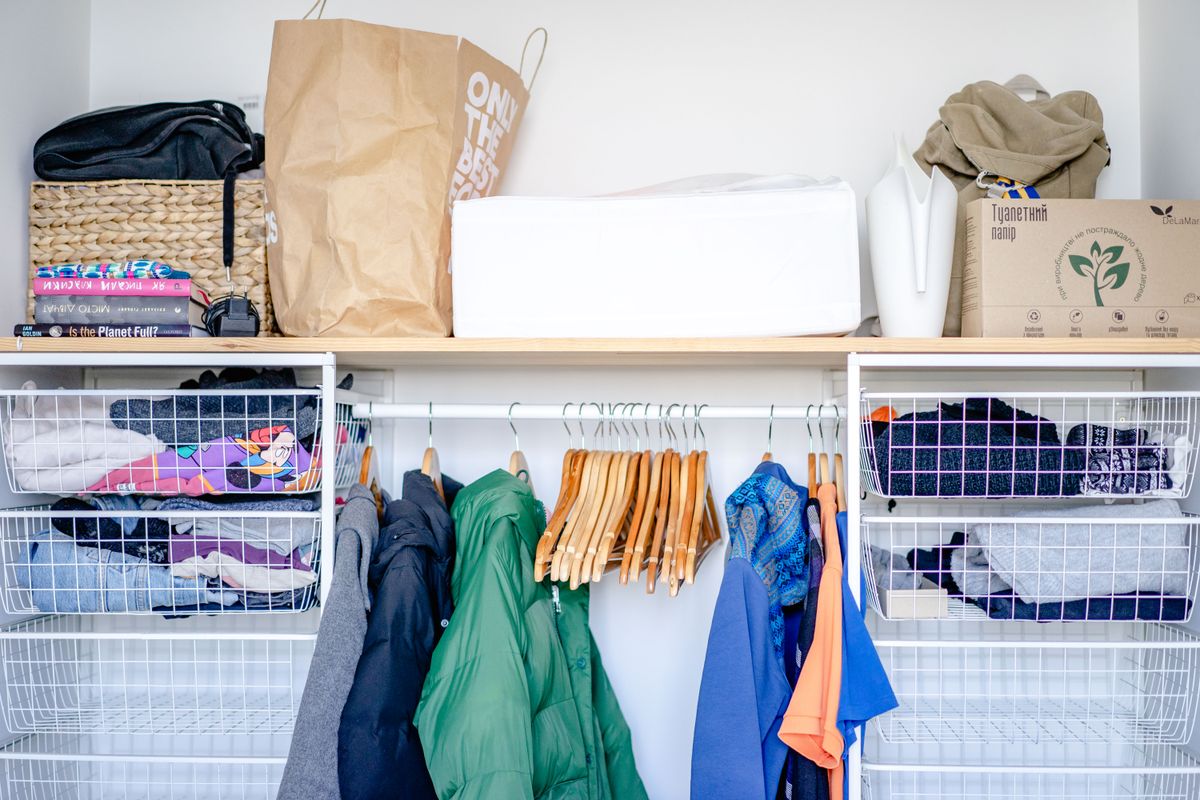
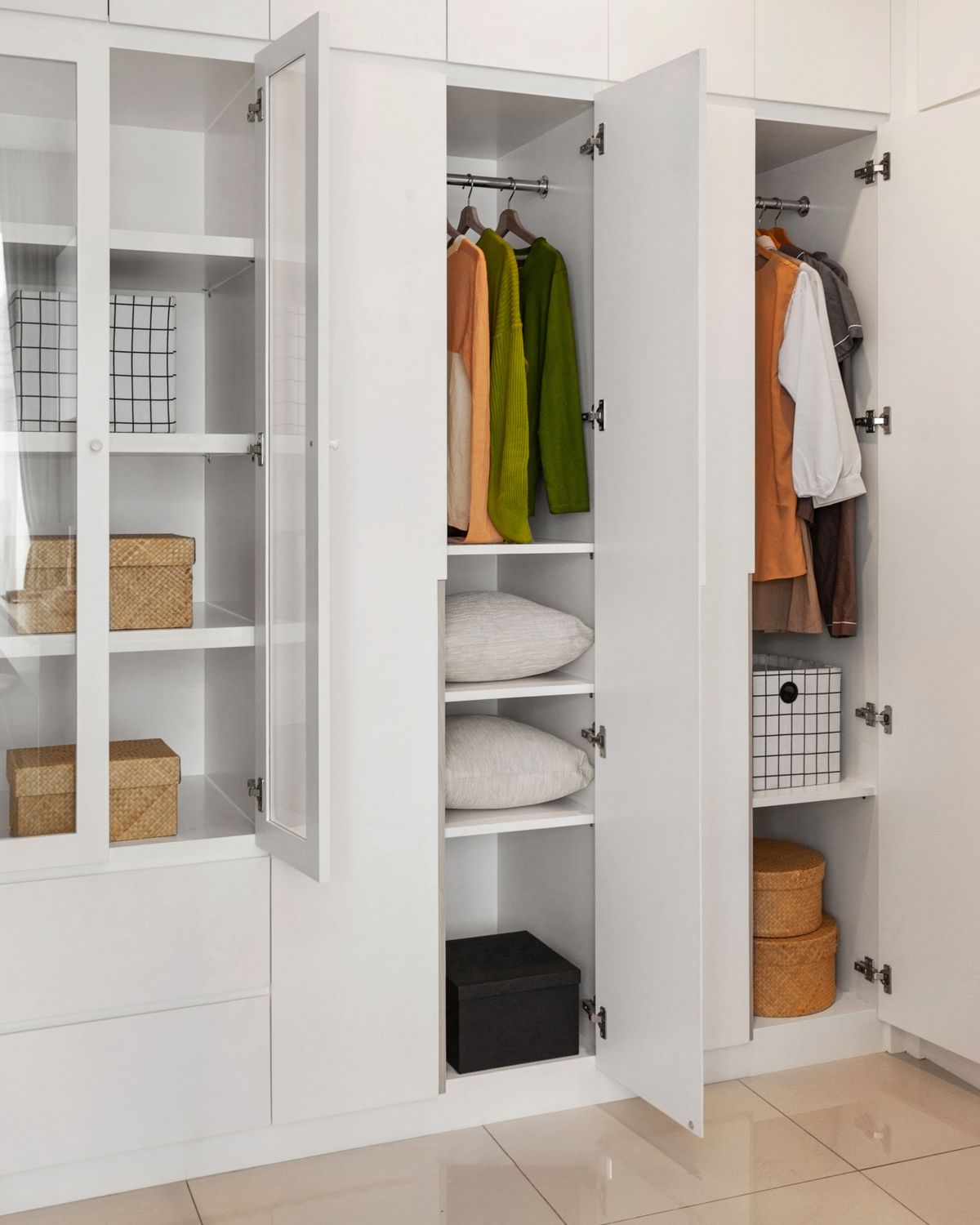
Function should come before appearance. Keeping shirts, trousers, jackets, dresses, and workwear in separate sections makes the closet faster to use and easier to reset.
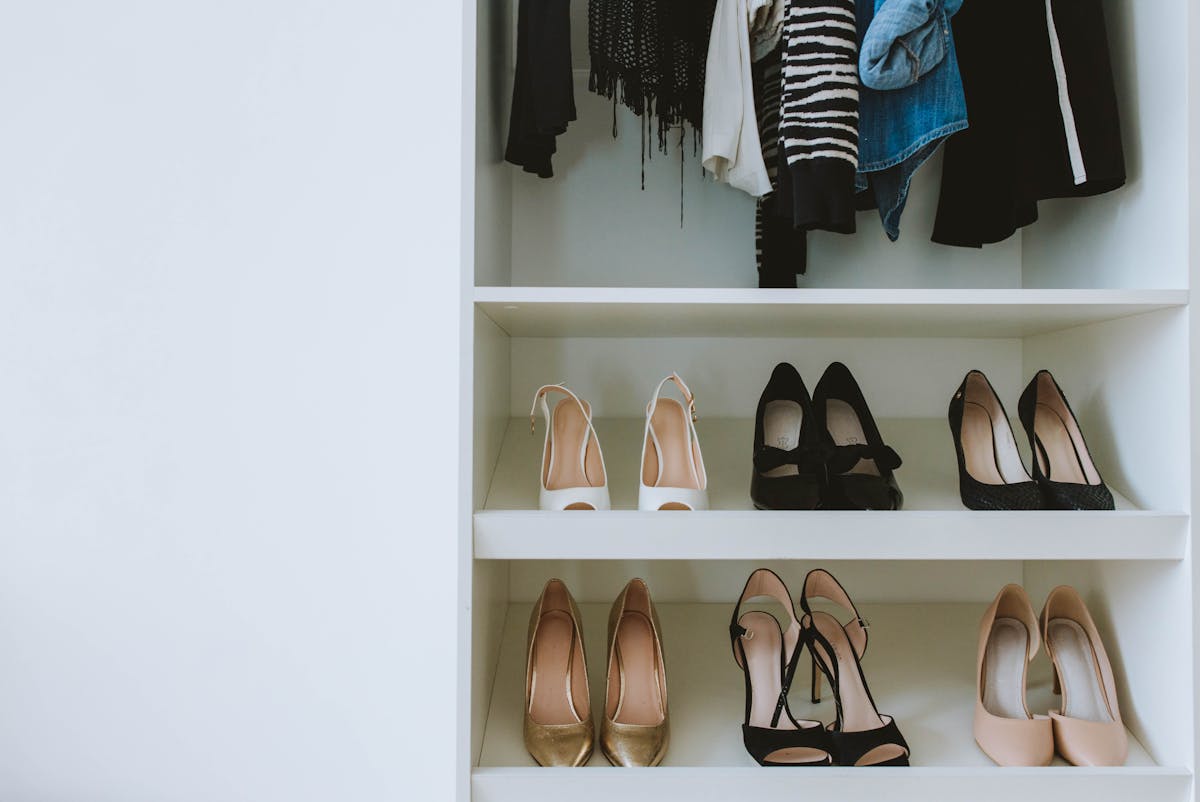
Shoes become difficult to maintain when every pair competes for the easiest shelf. Everyday footwear should be closest to the entrance or floor-level access, while occasional pairs can move farther away.
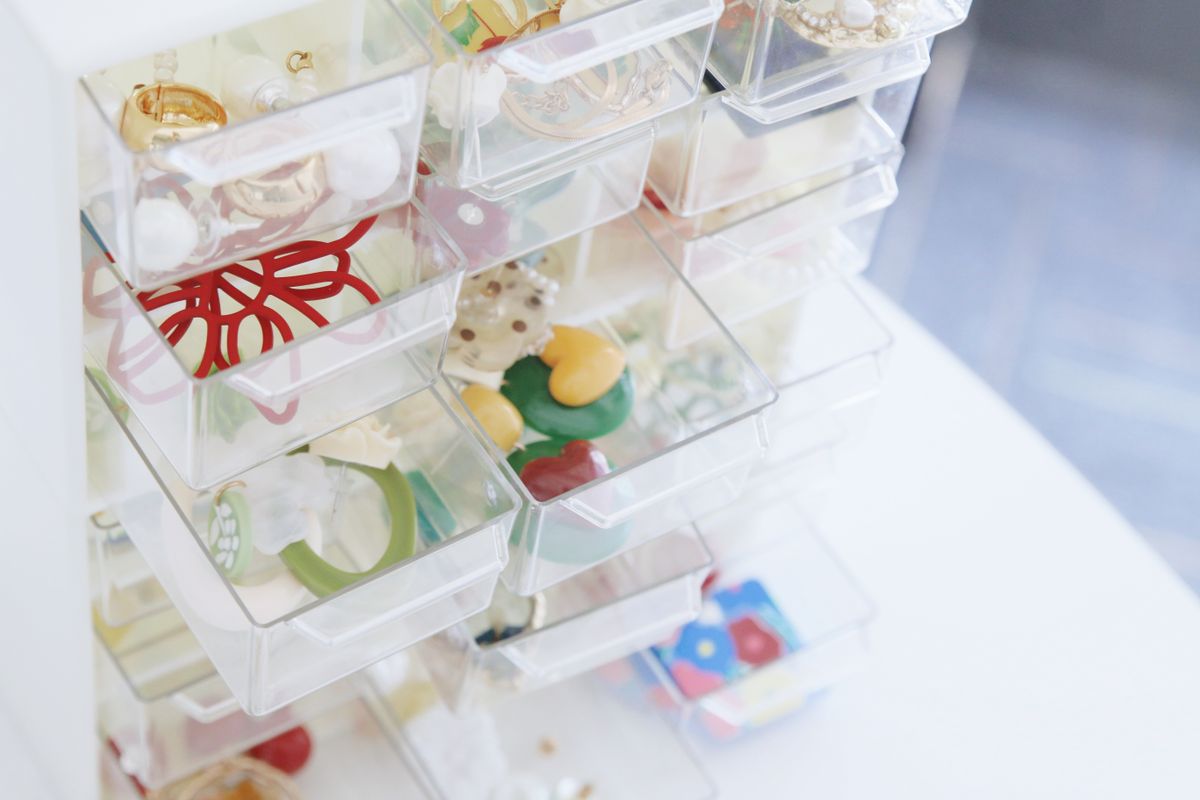
Jewelry, belts, scarves, watches, sunglasses, hair accessories, and other small belongings are easier to maintain when each category has a shallow, visible compartment.
Open shelves can become unstable when soft items are stacked too high. Baskets and contained shelf zones are useful for knitwear, linens, scarves, smaller garments, and flexible items that tend to collapse.
Beyond the Closet
Bedroom storage works best when overflow has a defined purpose. Underbed space and baskets should hold specific categories instead of becoming general places for anything that does not fit elsewhere.
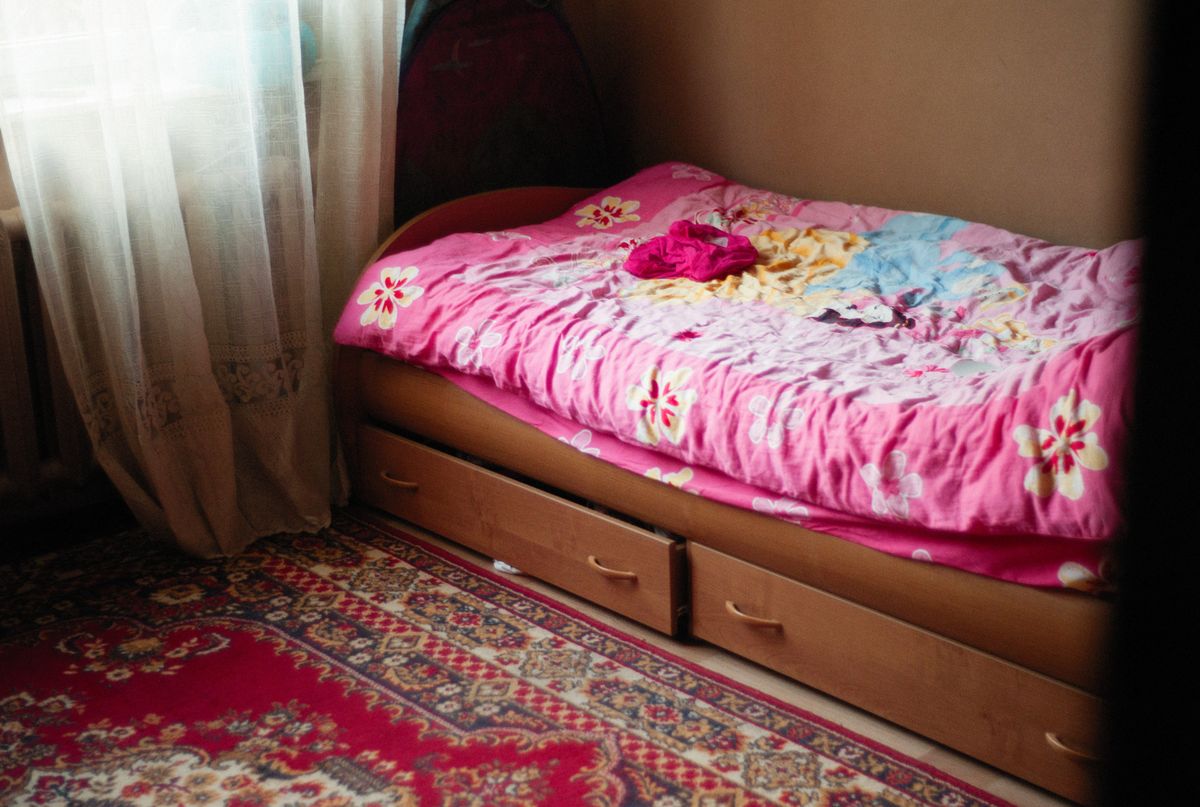
Store off-season clothing, spare linens, or occasional items under the bed rather than everyday pieces that need constant access.
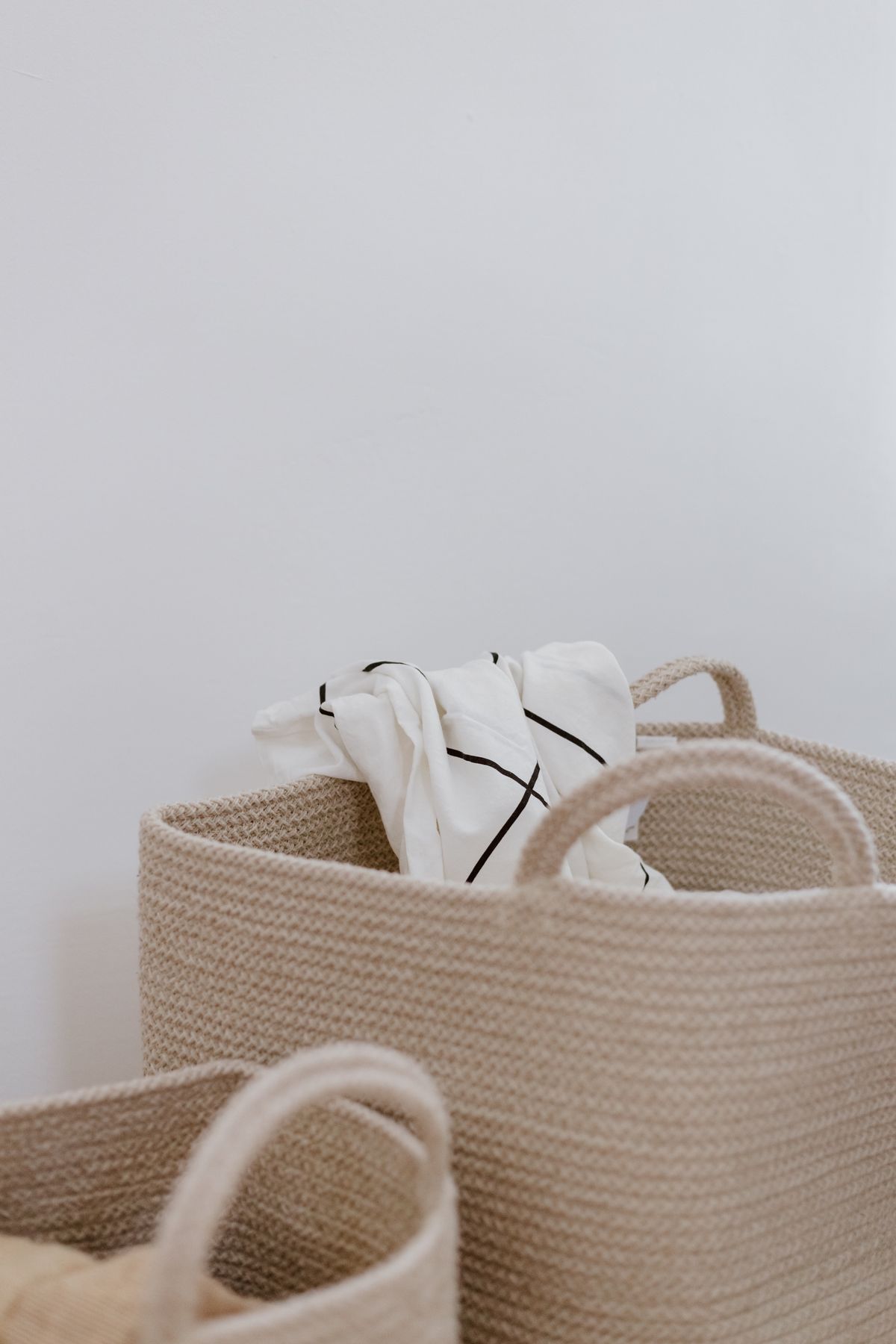
Baskets can contain blankets, linens, scarves, or soft accessories without requiring rigid compartments for every item.
The Seasonal Closet Reset
Seasonal transitions are a useful time to edit volume, change prime storage positions, and move low-frequency clothing out of the active zone.
Remove damaged, unworn, duplicated, or wrong-season pieces from prime storage.
Return empty hangers, re-group garment types, and restore breathing room on the rail.
Bring current-season shoes forward and move occasional pairs to secondary storage.
Return small pieces to defined compartments before they spread into drawers and surfaces.
Use underbed storage or upper shelves for clean, dry, low-frequency seasonal items.
Build a Closet That Stays Clear
Explore hangers and garment storage, underbed storage, shoe organizers, accessory organizers, storage bins, baskets, hooks, and hanging solutions for a more practical bedroom routine.